visualization
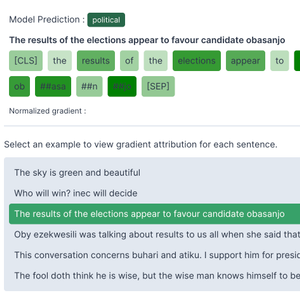
How to Implement Gradient Explanations for a HuggingFace Text Classification Model (Tensorflow 2.0)
Attribution based explanations via vanilla gradients for Huggingface BERT text classification models.
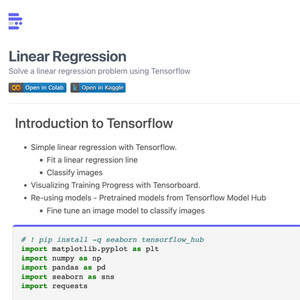
How to Render Jupyter Notebooks in Your Web (React) App
How to convert your Jupyter Notebook to html and render it in a web app using React based frameworks like Gatsby, Next.js etc.

How to Render Blender 3D Models in React with React Three Fiber
How to import 3D models created in Blender and view them in React with React Fiber.
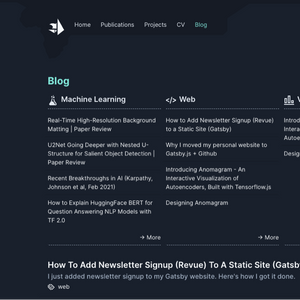
Introducing Anomagram - An Interactive Visualization of Autoencoders, Built with Tensorflow.js
An interactive tool that lets you train and evaluate an autoencoder for the task of anomaly detection on ECG data. It lets you visualize performance metrics, internal model state as training progresses, all in the browser.
Designing Anomagram
A discussion on some of the design and optimizations that support the user experience goals for the Anomagram app.
Read the Newsletter.
I write a monthly newsletter on Applied AI and HCI. Subscribe to get notified on new posts.