Hi, Victor here.
I'm a leader in AI agents, developer tools, and human-AI interaction.
I am an experienced technical leader. Most recently, I was a Principal Research Software Engineer at Microsoft Core AI, where I built AI agent infrastructure and developer tools (creator of Agent Optimizer in Foundry Agent Service; core developer for AutoGen, now 60K+ stars, and Microsoft Agent Framework). My research interests span AI agents, developer tools, and human-AI interaction. My research has been published at conferences such as ACL, EMNLP, AAAI, and CHI (1,750 citations, 9 patents) and has received multiple best paper awards. My work has also been featured in outlets such as the Wall Street Journal, VentureBeat, CIO . I am an IEEE Senior member.
I hold a PhD in Information Systems from City University of Hong Kong and an MSc in Information Networking from Carnegie Mellon University. I was previously a Principal Research Engineer at Cloudera Fast Forward Labs, a Research Staff Member at IBM Research, and Technical Lead for MIT Global Startup Labs, and founded a startup focused on West African markets.
In my free time, I enjoy music (some self taught guitar, piano), sports (participated in the Hong Kong Marathon thrice) and exploring art (some drawing, 3d modelling, african mask art).


Book
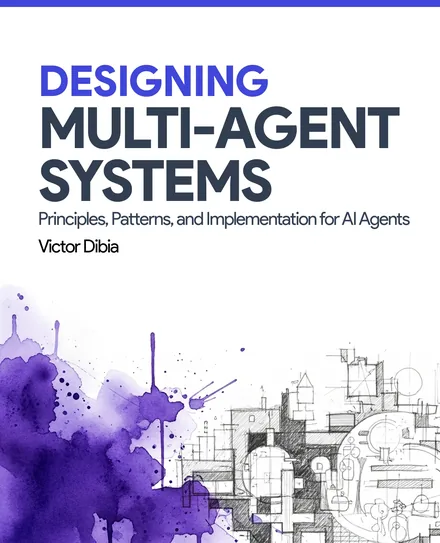
I wrote a book on multi-agent systems — how they work, when to use them, and how to build them.
What you will learn
- Multi-agent fundamentals — concepts and design patterns
- Build from scratch — picoagents
- Evaluation and optimization
- Real-world applications
New2025
Designing Multi-Agent Systems
Principles, Patterns and Implementation for AI Agents
Fifteen chapters, 46 hand-drawn diagrams and 154 runnable code examples. Updated quarterly — last revised August 2026.
Buy the digital editionPDF & EPUB · lifetime updates
Buy print on AmazonPaperback and hardcover
Contents and detailsWriting
Newsletter and blog
NewsletterAll 67 issues
How Jev works: calibrated decision models
Issue #69 | Jev from TypeSafe AI returns typed decisions with probabilities and generates no text. This article explains how it works and what it trades away, and tests the idea on open Qwen models.
Navier-Stokes: What Happens When AI Can Solve Long-Standing Mathematics Problems?
Issue #68 | AI agents can how solve difficult mathematics problems, faster than humans. Raises the question of how research is conducted, the role of the researcher and who can participate.
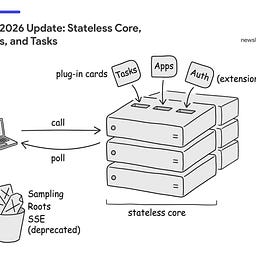
MCP July 2026 Update: Stateless Core, Extensions, and Tasks
Issue #67 | All you need to know about the updated MCP spec - stateless core, extensions, task runtime, current SDK support and integration considerations.
BlogAll 58 posts
AI Agents for Daily Life Tasks
Six ways I use AI agents outside work, and the practices that made them useful.
Thank You, Microsoft
Five years across Microsoft Research and Core AI.
Designing Memoir: An AI Interviewer That Never Writes for You
Design goals and architecture for Memoir, an agentic interviewer that helps you write a life story, a book, or an article — your own words, no slop.
Explainers
Things I am learning
Systems
How Jev works: calibrated decision models
Jev promises decisions with honest probabilities in milliseconds. How does it work, and how close does a stock open model get?
Training
GRPO: Group Relative Policy Optimization
How GRPO turns a handful of sampled answers into a training signal without a value network: a primer, four interactive studies and the decisions they settle
Research
Recent publications
2026
- Victor DibiaarXiv preprintpreprint
- Grace Hui Yang, Pranav N. Venkit, Hooman Sedghamiz, Enrico Santus, Victor Dibia, Ioana BaldiniKDD 2026 (Tutorial)tutorial
- Victor Chukwuma Dibia, Chenglong Wang, Bongshin Lee, Jeevana Priya Inala, John ThompsonPatent (Granted Mar 2026)patent
2025
- Victor DibiaBookbook
Projects
Recent projects


Product
Automatic evaluation and optimization of hosted AI agents in Microsoft Foundry Agent Service.


Open source
An open-source SDK and runtime for building, orchestrating, and deploying AI agents - the unification of Semantic Kernel and AutoGen.


Open source
A research prototype of a human-centered web agent with co-planning, co-tasking, and action guards.


Open source
A generalist multi-agent system where an Orchestrator directs specialized agents - WebSurfer, FileSurfer, Coder and ComputerTerminal - to complete complex, multi-step tasks.
Updates
Talks and news
TalksAll 13 talks
2026
2025
- MCP Dev Days, Virtual
- AI.Engineer Conference, SF, Marriott Marquis
2024
- QCon San Francisco 2024, San Francisco, USA
2026
- paper
- patent
- patent
Read the Newsletter.
I write a monthly newsletter on Applied AI and HCI. Subscribe to get notified on new posts.