The Agent Execution Loop: Building an Agent From Scratch
2025 has been dubbed the year of agentic AI. Tools like Google Gemini CLI, Claude Code, GitHub Copilot agent mode, and Cursor are all examples of agents—autonomous entities that can take an open-ended task, plan, take action, reflect on the results, and loop until the task is done. And they're creating real value.
But how do agents actually work? How can you build one?
In this post, I'll walk through the core of how agents function: the agent execution loop that powers these complex behaviors.
What is an Agent?
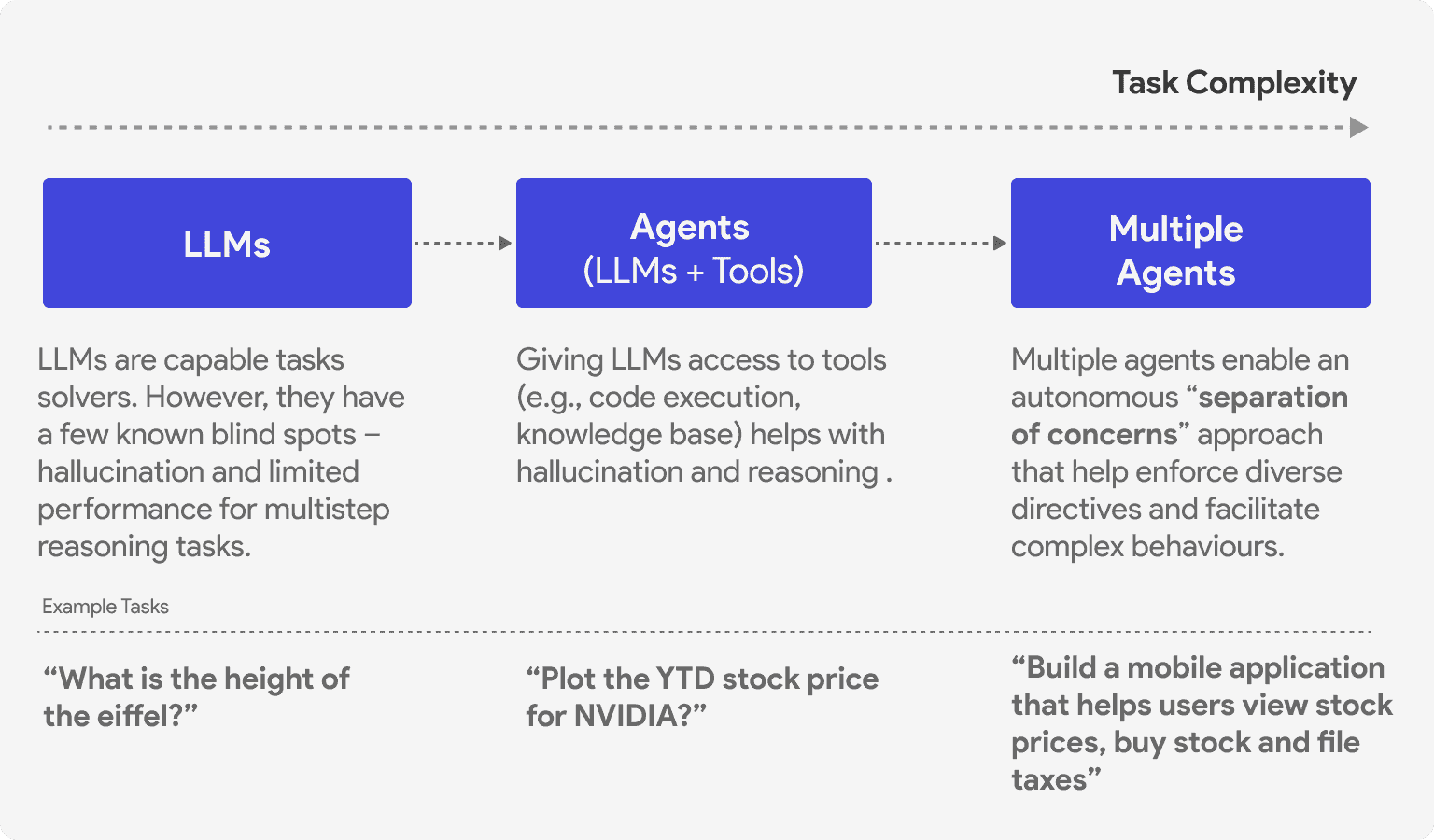
An agent is an entity that can reason, act, communicate, and adapt to solve problems.
Consider two questions you might ask an LLM:
- "What is the capital of France?" — Can retrieve from training data
- "What is the stock price of NVIDIA today?" — Needs to fetch current data from an API
The first question can be answered by a model directly. The second cannot - the model will hallucinate a plausible-sounding but incorrect answer because it doesn't have access to real-time data.
An agent solves this by recognizing it needs current data, calling a financial API, and returning the actual price. This requires action, not just text generation.
Agent Components
An agent has three core components:
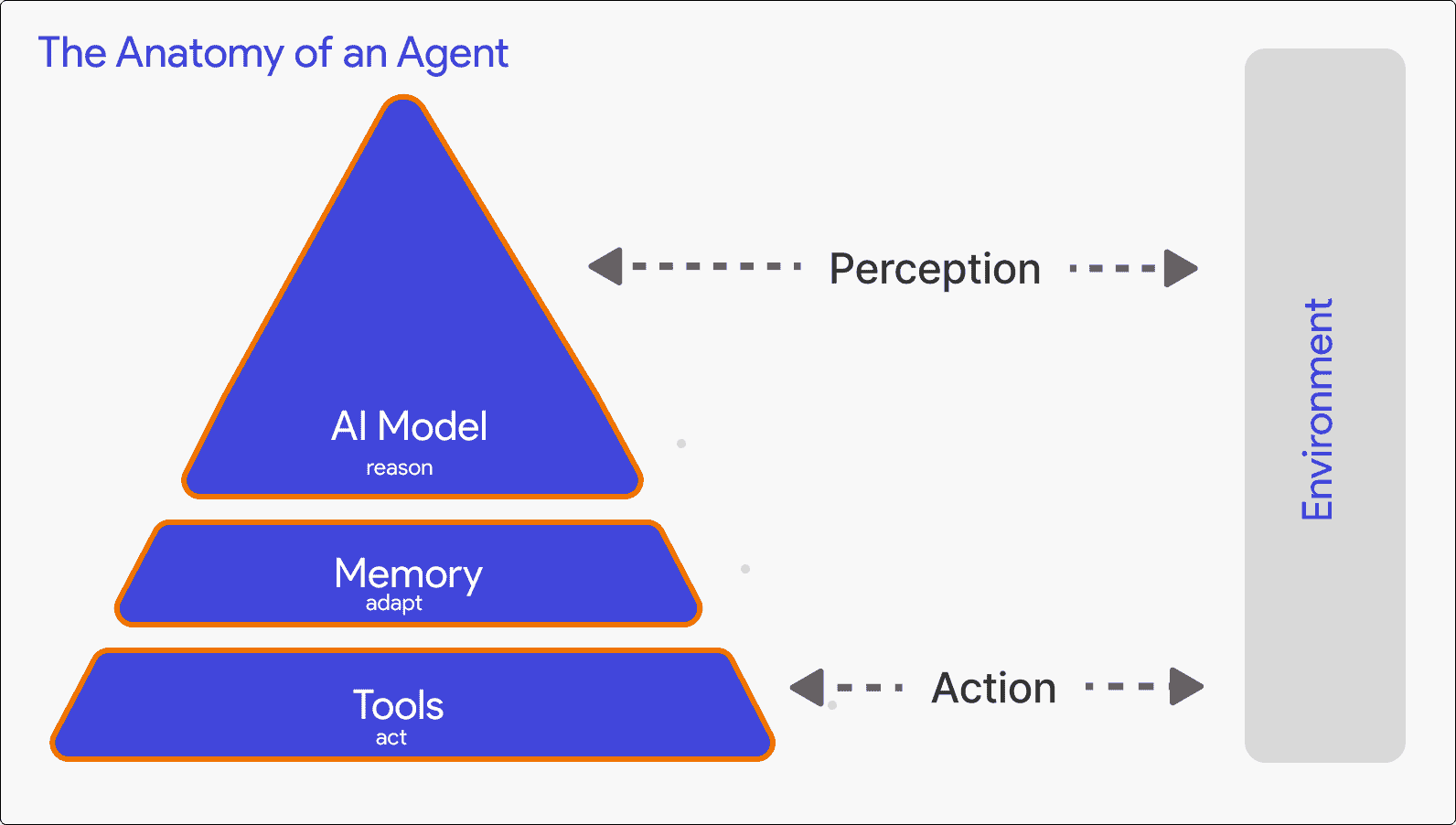
- Model: The reasoning engine (typically an LLM like GPT-5) that processes context and decides what to do
- Tools: Functions the agent can call to take action - APIs, databases, code execution, web search
- Memory: Short-term (conversation history) and long-term (persistent storage across sessions)
Calling an LLM
Before building an agent, you need to understand how to call a language model. Here's the basic pattern using the OpenAI API:
from openai import AsyncOpenAIclient = AsyncOpenAI(api_key="your-api-key")response = await client.chat.completions.create(model="gpt-5",messages=[{"role": "system", "content": "You are a helpful assistant."},{"role": "user", "content": "What is 2 + 2?"}])print(response.choices[0].message.content)# Output: "4"
The API takes a list of messages (system instructions, user input, previous assistant responses) and returns a completion. This is a single request-response cycle.
To enable tool calling, you also pass tool definitions:
response = await client.chat.completions.create(model="gpt-5",messages=messages,tools=[{"type": "function","function": {"name": "get_stock_price","description": "Get current stock price for a symbol","parameters": {"type": "object","properties": {"symbol": {"type": "string", "description": "Stock symbol like NVDA"}},"required": ["symbol"]}}}])
When the model decides it needs to use a tool, instead of returning text content, it returns a tool_calls array with the function name and arguments.
The Agent Execution Loop
Here's the core pattern that every agent follows:
1. Prepare Context → Combine task + instructions + memory + history2. Call Model → Send context to LLM, get response3. Handle Response → If text, we're done. If tool calls, execute them.4. Iterate → Add tool results to context, go back to step 25. Return → Final response ready
In code:
async def run(task: str):# 1. Prepare contextmessages = [{"role": "system", "content": self.instructions},{"role": "user", "content": task}]while True:# 2. Call modelresponse = await self.client.chat.completions.create(model="gpt-5",messages=messages,tools=self.tool_schemas)assistant_message = response.choices[0].messagemessages.append(assistant_message)# 3. Handle responseif not assistant_message.tool_calls:# No tool calls - we're donereturn assistant_message.content# 4. Execute tools and iteratefor tool_call in assistant_message.tool_calls:result = await self.execute_tool(tool_call.function.name,json.loads(tool_call.function.arguments))messages.append({"role": "tool","tool_call_id": tool_call.id,"content": result})# Loop continues - model will process tool results
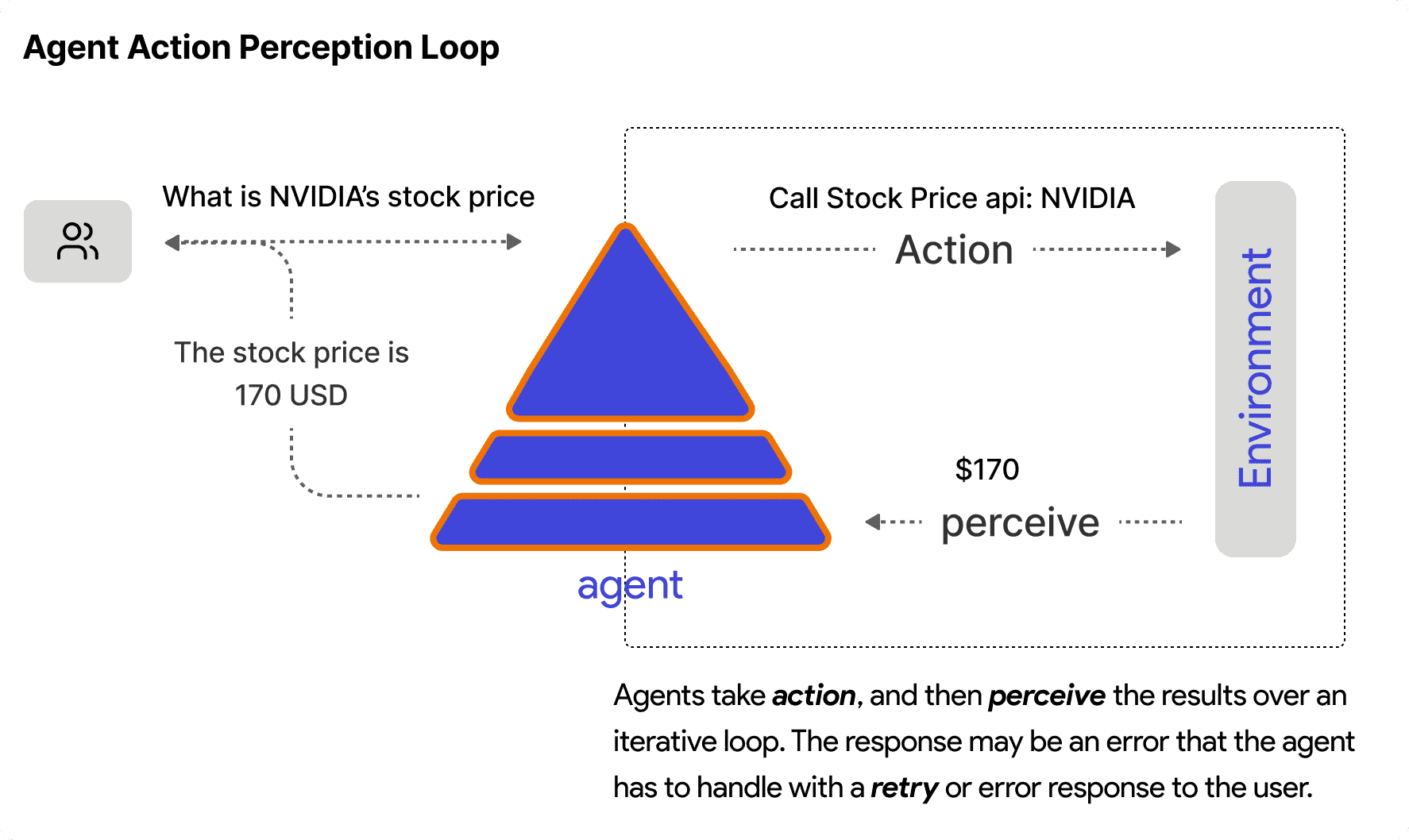
The key insight: an agent takes multiple steps (model call → tool execution → model call) within a single run. The loop continues until the model returns a text response instead of tool calls.
Tool Execution
When the model returns a tool call, you need to actually execute it:
async def execute_tool(self, name: str, arguments: dict) -> str:tool = self.tools[name]try:result = await tool(**arguments)return str(result)except Exception as e:return f"Error: {e}"
The result gets added back to the message history as a tool message, and the loop continues. The model sees what the tool returned and can either call more tools or generate a final response.
A Complete Example
Putting it together:
class Agent:def __init__(self, instructions: str, tools: list):self.client = AsyncOpenAI()self.instructions = instructionsself.tools = {t.__name__: t for t in tools}self.tool_schemas = [self._make_schema(t) for t in tools]async def run(self, task: str) -> str:messages = [{"role": "system", "content": self.instructions},{"role": "user", "content": task}]while True:response = await self.client.chat.completions.create(model="gpt-5",messages=messages,tools=self.tool_schemas)msg = response.choices[0].messagemessages.append(msg)if not msg.tool_calls:return msg.contentfor tc in msg.tool_calls:result = await self.execute_tool(tc.function.name,json.loads(tc.function.arguments))messages.append({"role": "tool","tool_call_id": tc.id,"content": result})# Usageasync def get_stock_price(symbol: str) -> str:# In reality, call an API herereturn f"{symbol}: $142.50"agent = Agent(instructions="You help users get stock information.",tools=[get_stock_price])result = await agent.run("What's NVIDIA trading at?")print(result)# "NVIDIA (NVDA) is currently trading at $142.50."
The agent:
- Receives "What's NVIDIA trading at?"
- Calls the model, which decides to use
get_stock_price - Executes
get_stock_price("NVDA")→ returns "$142.50" - Adds the result to messages, calls the model again
- Model generates a natural language response incorporating the data
Same Pattern, Different Frameworks
The execution loop we built is the same pattern used by production agent frameworks. The syntax differs, but the core architecture is identical: define tools, create an agent with instructions, run it on a task. The code snippets below show how each of these ideas are implemented in frameworks like Microsoft Agent Framework, Google ADK, and LangGraph.
Microsoft Agent Framework:
from agent_framework import ai_functionfrom agent_framework.azure import AzureOpenAIChatClient@ai_functiondef get_weather(location: str) -> str:"""Get current weather for a given location."""return f"The weather in {location} is sunny, 75°F"client = AzureOpenAIChatClient(deployment_name="gpt-4.1-mini")agent = client.create_agent(name="assistant",instructions="You are a helpful assistant.",tools=[get_weather],)result = await agent.run("What's the weather in Paris?")
Google ADK:
from google.adk import Agentdef get_weather(location: str) -> str:"""Get current weather for a given location."""return f"The weather in {location} is sunny, 75°F"agent = Agent(name="assistant",model="gemini-flash-latest",instruction="You are a helpful assistant.",tools=[get_weather],)# Run via InMemoryRunner
LangGraph:
from langchain_core.tools import toolfrom langgraph.prebuilt import create_react_agent@tooldef get_weather(location: str) -> str:"""Get current weather for a given location."""return f"The weather in {location} is sunny, 75°F"agent = create_react_agent(model=llm,tools=[get_weather],)result = agent.invoke({"messages": [("user", "What's the weather in Paris?")]})
All three frameworks: define a function, wrap it as a tool, pass it to an agent, call run. The execution loop underneath handles the model calls, tool execution, and iteration.
What's Missing
This basic loop works, but production agents need more:
- Streaming: Long tasks need progress updates, not just a final response
- Memory: Persisting context across sessions
- Middleware: Logging, rate limiting, safety checks
- Error handling: Retries, graceful degradation
- Context management: Summarizing/compacting as context grows
- End-user interfaces: Integrating agents into web applications
These are covered in depth in my book Designing Multi-Agent Systems, which builds a complete agent framework (picoagents) from scratch with all of these features.
 Announcing A New Book - Designing Multi-Agent Systems
 2023 Year in Review
 2024 Year in Review
 2025 Year in Review
 Introducing Peacasso: A UI Interface for Generating AI Art with Latent Diffusion Models (Stable Diffusion)
 State of Deep Learning for Code Generation (DL4Code)
 How to Explain HuggingFace BERT for Question Answering NLP Models with Tensorflow 2.0
 Top 10 Machine Learning and Design Insights from Google IO 2021